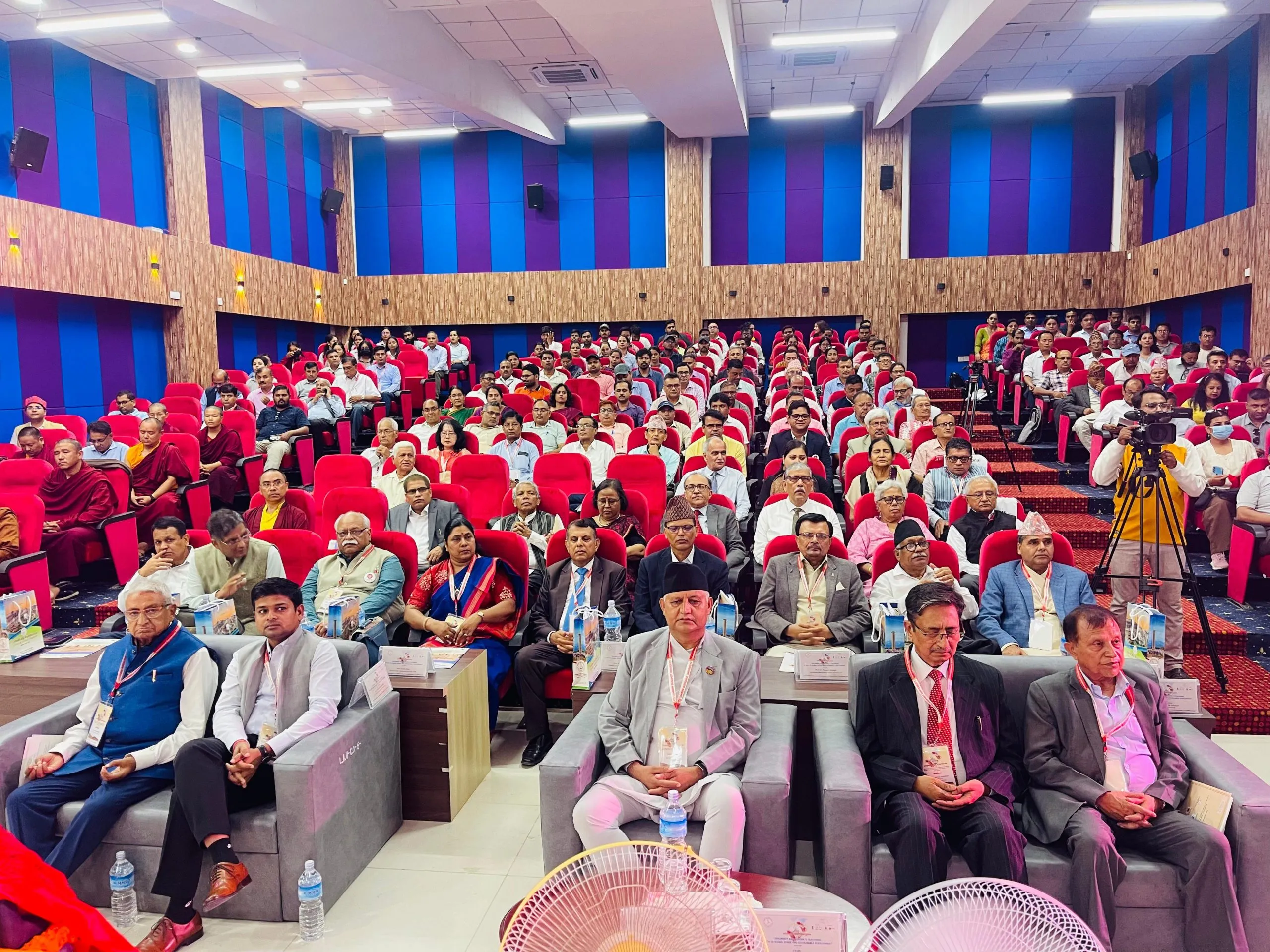
Research papers presented at this event.
Anju Khanal
· Asst. Lecturer, Central Campus, Lumbini Buddhist University
This paper examines how the Bodhisattva path in Mahāyāna Buddhism provides a transformative framework for attaining world peace. By grounding peace in ethical cultivation, inner transformation and compassionate engagement with the world, the Bodhisattva ideal transcends superficial or militaristic approaches to peace. Drawing on key Mahāyāna texts such as the Lotus Sūtra, Avataṃsaka Sūtra, Bodhicaryāvatāra and Vimalakīrti Nirdeśa Sūtra, this study analyzes the foundational principles of the Bodhisattva vow, the six perfections (pāramitās) and the doctrine of interdependence (pratītyasamutpāda) as the basis for cultivating enduring peace. The research incorporates a qualitative doctrinal analysis to highlight the relevance of Bodhisattva ethics in contemporary global peace-building.
Dayaram Bhandari
· Asst. Lecturer, Lumbini Buddhist University
The 21st century is witnessing unprecedented geopolitical conflicts, environmental crises and moral breakdowns in governance. As conventional diplomatic models fall short in resolving these challenges, this article explores the transformative potential of Buddhist teachings in advancing global peace and sustainable development. Drawing insights from the Pāli Canon, Mahāyāna scriptures and contemporary peace studies, the article examines how fundamental principles such as compassion (karuṇā), nonviolence (ahiṃsā), interdependence (paṭiccasamuppāda) and the Middle Path (majjhima paṭipadā) can contribute to a new moral framework for international relations. Employing narrative analysis and an interdisciplinary lens, the article proposes a Dhammic diplomacy model rooted in ethical leadership and spiritual awareness.
Dhiraj Kr Nirbhay
· PhD Scholar (UGC-SRF), Department of Buddhist Studies, University of Delhi
Asian Buddhism has today become a global religion, nurturing the basic sentiments of freedom, equality and fraternity. Lord Buddha has been called the 'Eye of the World' and 'The Light of Asia' because of his great thoughts and teachings of humanity. In the 3rd century BCE, after the Kalinga war, Emperor Asoka, inspired by the spirit of Dhamma Mangal, declared 'Dhamma Vijaya' instead of war victory — a beginning that became the foundation stone of the great mantra of world brotherhood and global peace, 'Vasudhaiva Kutumbakam'. This paper examines Buddha's concept of humanity and global peace in the contemporary context and its relevance to a shared vision for the future.
Fanindra Kumar Neupane, PhD
· Lumbini Buddhist University
In today's conflict-filled world, peace-building efforts often emphasize external negotiations and structural reforms while neglecting the inner mental states that sustain violence. Drawing on early Buddhist psychology, this paper argues that the Abhidhamma offers a profound cognitive framework for understanding how unwholesome mental factors — greed (lobha), hatred (dosa) and delusion (moha) — fuel individual and collective conflict. Using qualitative textual analysis of sources such as the Dhammasaṅgaṇī and Abhidhammattha Sangaha, the paper finds that transforming harmful mental patterns through mindfulness (sati), loving-kindness meditation (mettā bhāvanā) and right speech (sammā-vācā) can lay a practical foundation for non-violence.
Mr. Gajendra Gupta
· Assistant Professor, Lumbini Buddhist University
Lumbini, birthplace of Gautama Buddha, is deeply religious, historic and diplomatically significant in the global landscape. This study explores how Lumbini serves not only as a holy pilgrimage destination but also a tangible symbol of peacebuilding and cultural diplomacy. Based on Buddhist ethical values such as non-violence (ahimsa), compassion (karuṇā) and interdependence (paṭiccasamuppāda), the paper analyzes the role played by Lumbini in global harmony through religious diplomacy, protection of world heritage and inter-religious dialogue. The study concludes that Lumbini, if well developed and facilitated through multilateral support, can emerge as a world hub for moral diplomacy, inter-faith harmony and sustainable peace.
Juehui Lee
· PhD in Pali, Department of Pali and Buddhist Studies, Savitribai Phule Pune University
Buddhism basically emphasises human inner practice and growth, since all suffering comes from attachment. However, in reality conflicts are constantly rising — between conservatives and progressives, between the rich and the poor, generational, gender and labour-management conflicts. This paper examines how the Buddha approached conflicts. A new horizon of conflict resolution can be opened only when we see reality as it is (yathābhūta). To discuss a realistic and rational solution to social conflict that the Buddha gave, the paper scrutinises the Araṇavibhaṅgasutta (the analysis of peace, MN 139).
Kamal Thapa
· Lumbini Buddhist University
Emperor Ashoka, one of ancient India's most influential rulers, exemplifies ethical leadership and diplomacy grounded in Buddhist principles. His transformation from a formidable conqueror responsible for the devastating Kalinga War to a proponent of nonviolence and compassion marks a profound moral turning point in history. This paper explores Ashoka as a "Dharma Diplomat" who employed the teachings of the Buddha to shape a governance model based on peace, tolerance and ethical responsibility. Through his rock and pillar edicts, Ashoka articulated policies promoting religious harmony, respect for all life and moral accountability — an early form of soft-power diplomacy grounded in shared values rather than coercion.
Prof. Dr. Saw Htut Sandar
· Mahāpajāpatī Gotamī Subharti School of Buddhist Studies (MGSSBS), RBBSU, Dehradun, India
This paper presents a historical and ethical reflection on the Rohinī River dispute between the Sakya and Koliya clans and the Buddha's marvellous intervention. It was not a legend or story; it symbolized the Buddha's diplomacy, rooted in compassion, non-violence and rational teachings. References from canonical sources such as the Dhammapada, Sutta Nipāta and Jātaka literature demonstrate the enduring relevance of Dhamma as a framework for peacebuilding — personally, socially and globally.
Sanghamitra Gautam
Global peace is a paradigm of international diplomacy where nations collaborate harmoniously, prioritizing mutual understanding, cooperation and collective progress. The Buddha's teachings provide an approach that can be applied to diplomacy to create a peaceful environment at world level, seen through the principle of loving kindness (Metta), the first sublime state of the Brahmavihāra. Metta is the wish for the welfare and happiness of all sentient beings, practised through Metta Bhāvanā meditation — first towards oneself and then towards all beings. To develop harmony, countries should adopt peace-negotiation policies grounded in loving kindness for the benefit of their people.
Shakti Dhar Yadav
· Lumbini Buddhist University
This paper examines the democratic and ethical decision-making practices of the early Buddhist Sangha and compares them with those of modern global institutions such as the United Nations. The Sangha is the Buddhist monastic community guided by the Vinaya and consensus, while the United Nations promotes international peace, rights and development through diplomacy among member nations. Exploring consensus-building, non-hierarchical leadership and moral governance, the study argues that ancient Buddhist organizational practices offer valuable insights for contemporary diplomacy and international governance.
Usha Kiran Gnawaly
· Lumbini Buddhist University
In an age of fundamental conflicts of interest, civilizational clashes and the omnipresent threat of nuclear proliferation, diplomacy remains one of the few stable foundations of international society. The paper argues that, although traditional diplomacy appears to be in severe decline, it is not dead but requires reorientation to an alternative paradigm: Buddhist Diplomacy. Rooted in the Buddhist principles of Sarvasattva Rakṣā (preservation of all beings), Panchsheel (five principles of peaceful coexistence) and Parahita/Parakalyāṇa (working for the welfare of others), these core philosophies offer a normative foundation for rethinking the practice of international relations and diplomacy.
Ven. Candavara
· Research Scholar, Department of Buddhist Studies, Ras Bihari Bose Subharti University, Dehradun, India
In a time of increasing global tensions and complex international relations, diplomacy now needs more than strategic skills; it also requires emotional intelligence, cultural sensitivity and inner calmness. This paper examines how mindfulness — based on Buddhist meditation traditions — serves as a powerful tool in diplomatic work, helping develop self-awareness, emotional control and non-reactivity. Through case studies, interviews and a review of research fields, the paper argues that integrating mindfulness into diplomatic training and practice boosts individual performance and promotes more ethical, sustainable and peace-focused international relations.
Silacara
· Research Scholar, Department of Buddhist Studies, Ras Bihari Bose Subharti University, Dehradun, India
The Buddha's teaching on Right Speech (Sammā Vācā), a core component of the Noble Eightfold Path, presents a profound ethical framework for cultivating inner and outer peace. It prescribes four key principles: abstaining from false speech (truthfulness), from divisive speech (promoting harmony), from harsh speech (using kind and gentle words) and from idle chatter (speaking purposefully). By cultivating truthful, unifying, gentle and mindful speech, individuals dismantle the roots of interpersonal conflict and sow seeds of reconciliation and harmony — making ethical communication an essential, practical tool for peacebuilding.
Ven. Sona
· Research Scholar, Ras Bihari Bose Subharti University, Dehradun, India
The concept of kamma (karma) in Buddhism emphasizes the moral law of cause and effect, where wholesome actions lead to positive outcomes and unwholesome actions lead to suffering. This paper explores how intentional acts of kindness, compassion, generosity and ethical conduct contribute not only to personal well-being but also to the harmony of societies. Through the cultivation of right intention and ethical living, peace becomes not only a goal but a natural result of living in accordance with the Dhamma.
Nutandhar Sharma
A paper presented in the paper-presentation session examining how Buddhist values and shared heritage can inform strategies for addressing bilateral issues between India and Nepal, fostering trust, dialogue and cooperation.